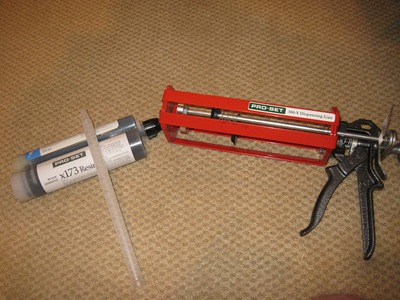
Once I had all three fins tacked on, it was time to make the internal, and external fillets. I decided not to use the same ad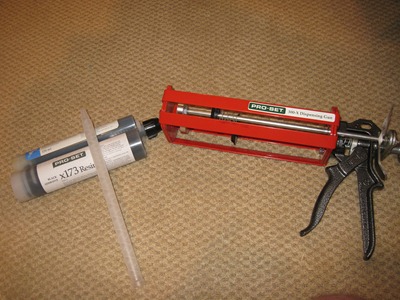 hesive epoxy I had used to tack on the fins, and build the motor tube. While I really like the E-120HP, once cured, it is almost impossible to sand. I’ve used it once before on external fillets, and when I went to sand them down, I wound up taking a lot of the fiberglass around the fillet, but not the fillet itself. Instead, I opted for Pro-Set x173 / 275. Pro-Set is owned by the Vaughn Brothers, the same parent company that West Systems is. West Systems is a very popular adhesive, and laminating resin used by others in hiigh power rocketry. The two main differences between Pro-Set, and West Systems is Pro-Set comes in a cartridge system for use in a big glue gun (and, I like glue guns!), and they offer specialty resins for the aerospace industry. X173 is a black adhesive aerospace resin with some interesting properties. First, it can handle extremely high temperatures – higher than JBWeld. Second, it has an extremely high tensile strength – well over 10,000 psi. It’s hardness (Shore D) is above one hundred when used with a medium or slow hardne
 r, yet it can be wet sanded. I didn’t say it was easy to sand, certainly not like a traditional epoxy or laminating resin, but much better than hysol.
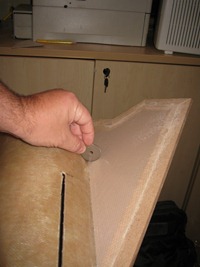
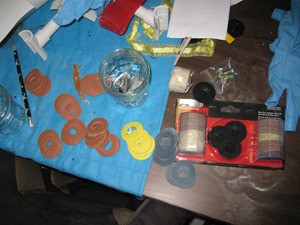
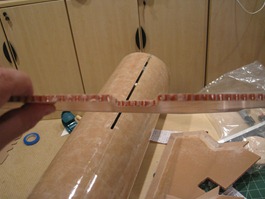
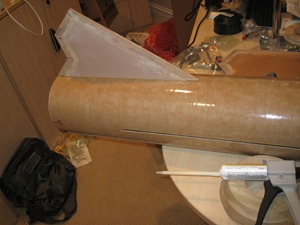
Since it is still difficult to shape and sand post cure, I spent a lot of time prepping for the fillet, and used a technique that generally creates baby-smooth fillets that don’t need a lot of work. I think I need to give Tim Lehr credit for process, as I think I first saw it from on a mongoose using proline epoxy, which is very similar to the x173 / 275 I am using. First, I take a washer and run it down the length of the aiframe, and fin, creating a very light scrape in the fiberglass where ithe metal’s edge touches the fin and airframe. I then measure the line, with a ruler and put down a few dashes along the line with a marker., ensuring each mark is measured accuratly. Once I have my guide lines down, I t ake 1/2” airbrush masking tape and lay it down exactly on the marked guidline. The tape is now at the trailing edge of the fillet I am going to make, and willl ensure an even line once the epoxy has set. I should point out I’ve now coupled the upper and lower airframe together, to give me enough weight to secure the lower airframe to a PVC rocket holder. Since this have a very high set time, I need everything to be very secure for at least a day once complete.
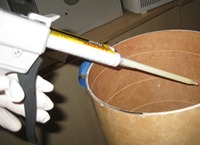
You would think I would just use that awesome mixing wand to put a nice even bead down, and be done. Unfortunately, experience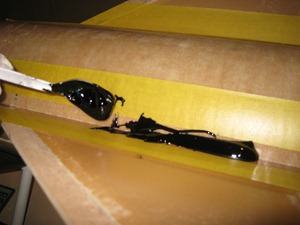 e has proven I don’t have the skills to make a good fillet with a gun and wand this big. I opt to fire the epoxy into a cup, and hand mix the epoxy the traditional way. Once mixed, I take a spoon, and fill the space between the masking tape. This stuff is really hard to control. It has a very high viscosity which makes it difficult to work with, but, of course, that’s what the tape is for. I then prepare a cup of isopropyl alcohol, lots o
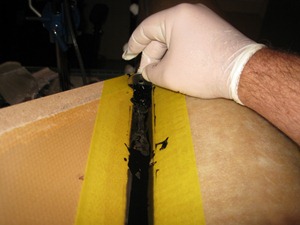 f paper towels, and a second cup to catch the excess epoxy.
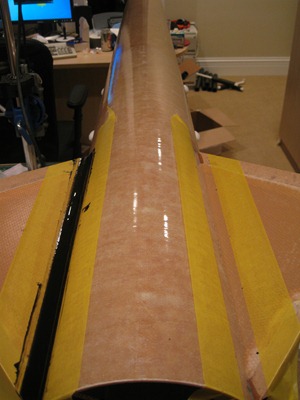
I take the washer, dip it in the alcohol cup, and take small pulls of the washer to even out the epoxy, eventually pulling the excess of the end of the fin into my second cup. Once it’s even, I redip the washer in Alcohol, and take one final pull slowly, and evenly from one end of the fin to the other. The end result should be
an
extremely smooth, almost glass-like fillet. I then take a tongue depressor, and create a taper on the leading and trailing edge of the fillet. On the leading edge, this will make it easier to do tip-to-tip lamination, while in the rear, it will even the height of the fillet (and lamination) to the boat tail which will be installed later. I repeat the same process on the second fillet. Once the external fillets are finished, I start work on the internal fillets. Frankly, the care and preperation I took on the external fillets all went out the window for the internal fillets. Nobody is going to see these, and they don’t need to be smoothed, as I don’t plan on laminating the inside. In fact, I plan on foaming the inside, so human eyes are never going to see these again. I did take some pictures, but upon review, I’m actually a little embarrassed how messy I was. Looks like my four year old had a field day in there. I wait about 90 minutes – enough time for the external fillets
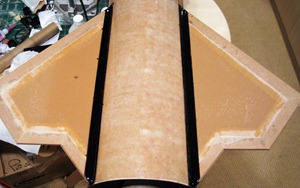
to start to set, but WAY before they are really cured, to pull the masking tape away, leaving a clean fillet line on each side. The picture to the left is actually 24 hours later, after the epoxy is cured. You can see the fillet still looks wet, it’s so glass-like smooth. Once done, I repeat this process three more times, ensuring both sides of each fin have exactly the same fillets,while the inside looks like a barrel of monkeys had a poo fight. I then wait an extra day for good measure before I start foaming the in tabs.
Foam can be both fun, and frightening. Its really cool to watch foam set and expand, yet at the same time, if you miscalculate how much foam you need, you can have a huge mess on your hands. In my case, too little foam in the first pass, and I would find myself having to deal with three independent compartments of foam to ‘get right’ in a second pass. Too much foam, and I would risk it running over the fintabs into the boat tail section creating a big post-foam clean up process.If things really went badit could run into the slimline adapter and messing up the threads. With this in mind, I secured the slimline with masking tape, and ran a test to determine how much the foam would expand using 5ml of a, and 5ml of b. Once dried, I calculated it has expanded about 24 times. I then calculated the volume of the lower airframe section, and subtracted out the area of the motortube. I divided that volume by 24 to come up with the right amount of foam to do it in one pass. I measured part B, then mixed an equal amount of part A in. Foam starts to expand quickly – within about 45 seconds of mixing at the temperature my office was at, so I didn’t have a lot of time to waste. I poured the mixed foam into the aft airframe, and just watched and waited.
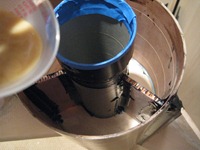
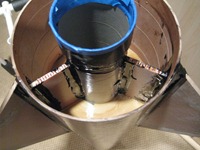
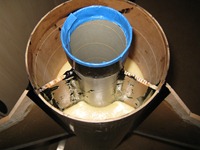
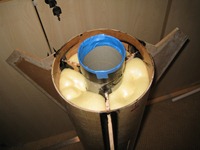
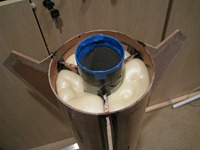
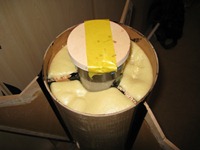
As you can see, it came out PEFECT. The foam finished expanding exactly where I had calculated, and started to harden at the end of the fintab, where the boat tail would glued later. This was almost too easy – something is going to go wrong down the road.
At this point, I start to pack everything up in my wife’s minivan to bring up to Bong Recreational Area in the morning to show my TAP sponsors my progress so far, and (I hoped) to launch a few rockets.
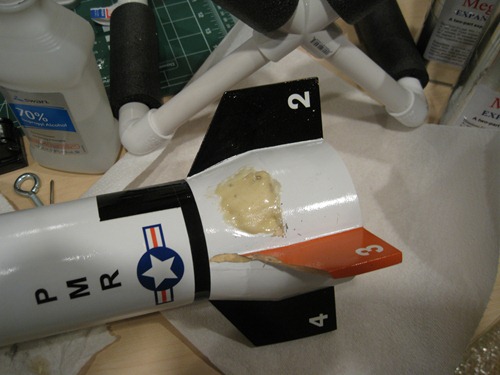
Oh yeah, since I had a little bit of the foam left on the spoon, I smeared it into a rocket on my bench that needed a pretty serious repair. Once the foam cures, I ‘ll just sand it down, and laminate a small piece of e-glass over the foam. Thiis stuff is great.




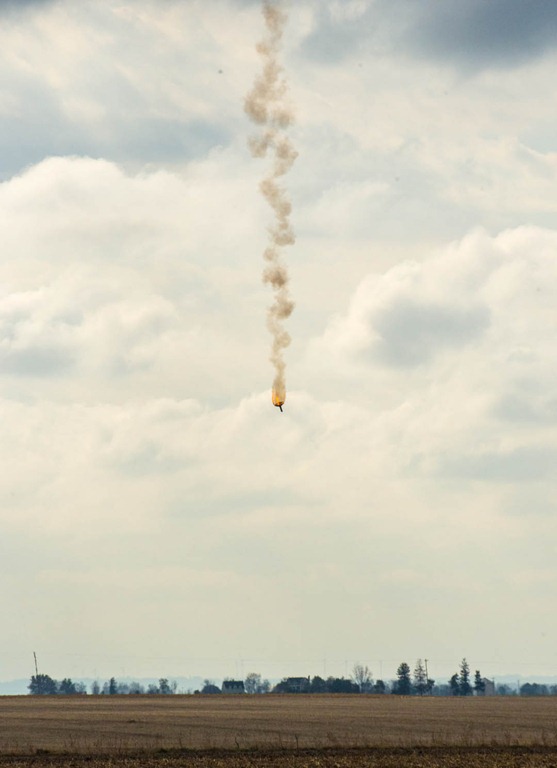
 . Parachute didn’t deploy, so I had to scrape the remains of the rocket off the side of the road. Also launched my scratch built Nike
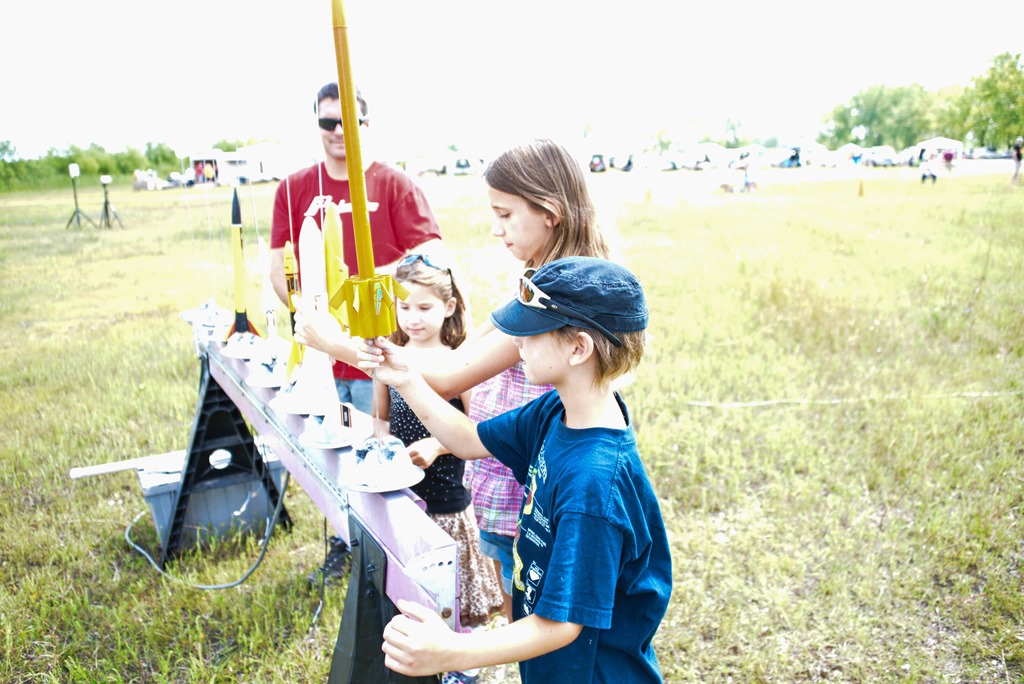
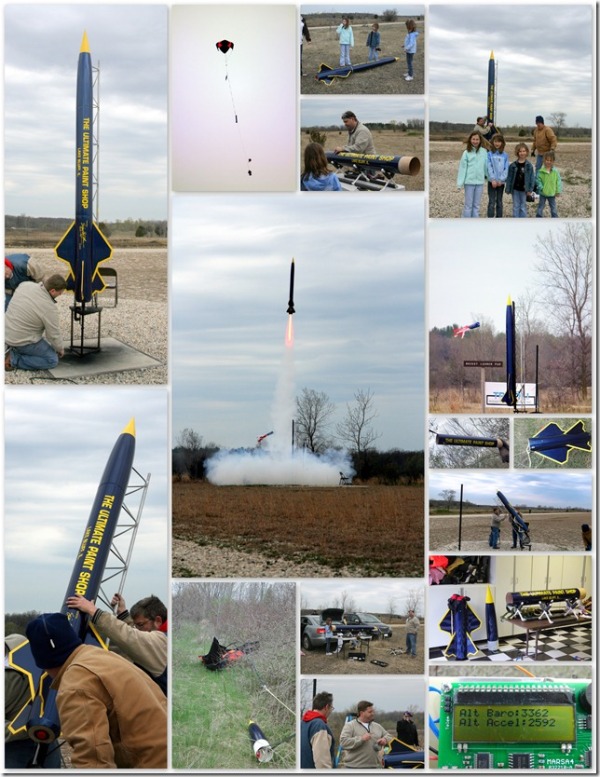
 . Kids had a blast launching from the low power pads. Tried several new rockets, including a few gliders with mixed results. One big lesson… don’t put an ammonium perchlorate based motor into a light glider. We spent quite a while picking up the shredded pieces across the flight line. My good buddy Aaron brought two of his boys up to watch as well. Always fun to see new kids get excited about the hobby.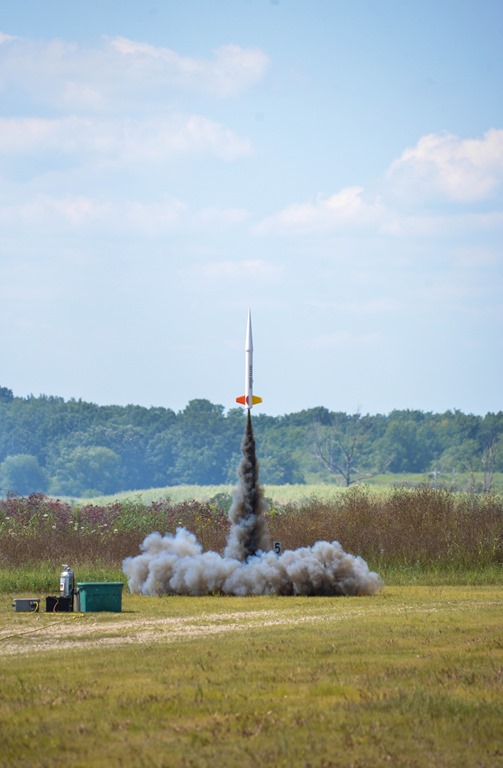









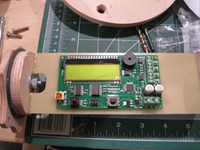
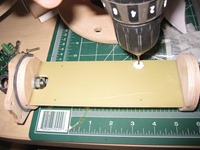
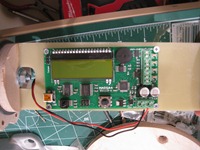

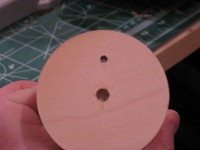

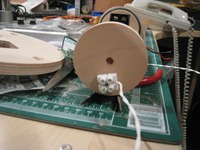
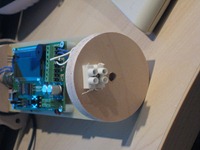
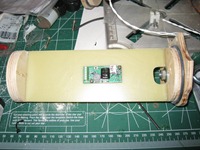 when you look at it in this big AV bay. The raven is more complex to install since it uses a common + wiring scheme. While the Marsa4 had discrete connectors for everything (a + and – for each e-match, the battery, and the power switch), the Raven only has 4 terminals and a battery + for everything. This means the power switch has to be inline, and each e-match has to be connected to the same + battery post. Not a big deal, and great if you are putting this in a minimum diameter rocket. With the amount of space in my AV bays, it’s kind of unnecessary. That said, this is my most



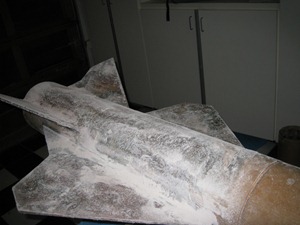 I ended up with on the wing tops and fin can. Worse, I can’t really fit an electrical sander in that area, so I’ve had to create all sorts of sanding devices to get into that area. You can see what looks like multiple colors on the wings and fins in the picture on the left. This is indicates in some areas I have sanded through the top layer of fiberglass into the Kevlar. That’s not necessarily a good thing,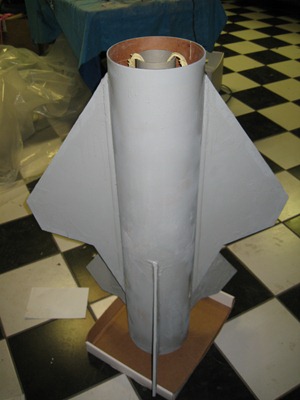
 put a damper on rocket building and pretty much everything else. Worse, I have taken a lot of my OLD rockets out of storage few weeks ago (a Brutus, Maximum Thrust Thunderbird, and a few other 15+ year old HPR rockets) to show my kids, and clean up for flying this weekend at Bong. Given how thick the snow is, I can’t imaging wading through it all in my leg cast trying to recover the rockets
  . I’ll still go up to see if either of my tap sponsors want to see my progress, but if I fly something, it will be small.
 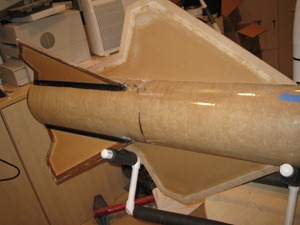 to get the wings on. First, I had to re-cut the wing slots. The lower portion was glassed over when I made the fin-can, and the whole slot itself wasn’t quite thick enough for the wings to fit through. I repeated the process on the other side, until I could dry fit both wings with a tight fit. One of the issues I will have with the wings is my limited ability to make interior fillets since both sides of the centering rings are already glued in place. First, I filled the interior of the wing’s nomex honeycomb with epoxy and put it into the slot. I let the epoxy ooze out of the honeycomb, then removed the fin. This gave me a line of epoxy on the motor tube where the wing made contact. I repeated that process a few times to build up the epoxy on the motor tube. I then drilled a few half-holes in the wing-slots which allowed me insert a syringe into the body and add epoxy for a sloppy, but effective internal fillet on each side of the wing. Once it was dry, I was able to look through the upper center ring hole I made to pour foam to ensure a the wing was touching, and had a a fillet, and taped it up to cure. I repeated the same process on the other side until both wings were secure w
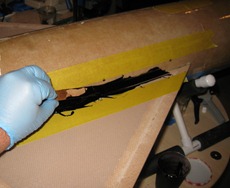 ith internal fillets.
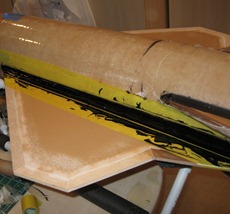 was a little more tricky than the fins because the wing is more than twice the length. Worse, there was not enough clearance between the wing
 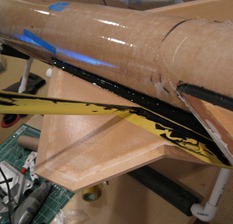 and the fin for me to use the same diameter washer I had used on the fins. Eventually, I settled on using my finger to spread, and create the fillet, dipping it in alcohol between pulls, exactly like using the washer. The result was significantly more messy,
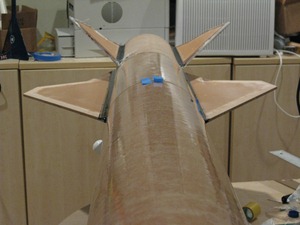 but just as effective in creating a very smooth fillet, with clean lines. This will reduce the amount of sanding I will have to do before glassing the fins.
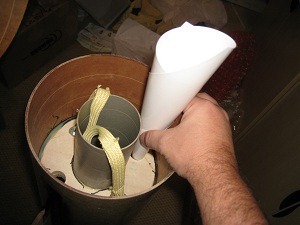 sustainer which I was using as a lever to keep the lower sustainer in my rocket holder to mount the sustainer upright. It’s foam time! Once again I calculated the empty volume on each wing side, mixed the proper amount (266 ML, half part A, half part B), made a quick funnel out of paper and poured in the foam. Within about 5 minutes, the foam had expanded, almost perfectly to the bottom of the pour hole. I love it when a plan actually works so well! I repeated the same process on the other side, mixing exactly the same amount of foam, but when it was done expanding, I could barely see to top through the pour hole.
 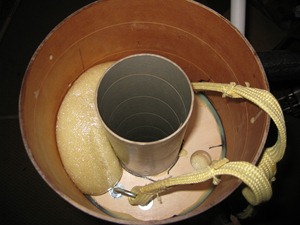 Yikes! Luckily, my kids weren’t around to see the utter failure of math and science’s ability to predict an outcome. II now had no idea how much volume was left in the sustainer, so I had to do the one thing I hate to do…. guess. As you can imagine, I didn’t guess right, and you can see the results on the right – an oozing mess out of the top of the second pour
 hole. Luckily, this is not as bad as it looks, and I have a fair amount of experience digging foam out of tight spots thanks to a lot of lawn darts during my magnetic ejection trials. five minutes with my trusty foam extractor (a special grapefruit knife), and a little sanding, and it almost looks like I got it right the first time. I’m now going to move everything out of my office and into my garage in preparation for the massive amount of sanding I’m going to need to do. I would like to thank an anonymous reader for the tip on where to find sanding discs for my 3d sander. A kit of 100 can be had at a retailer named Micro-Mark
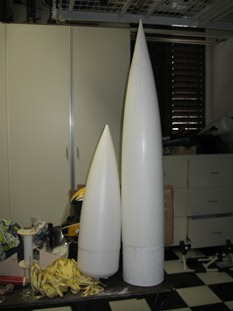
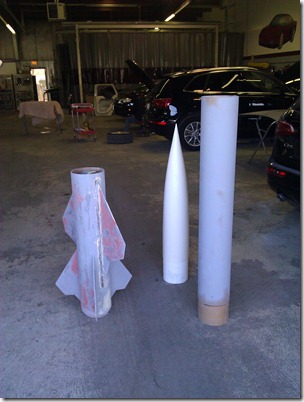
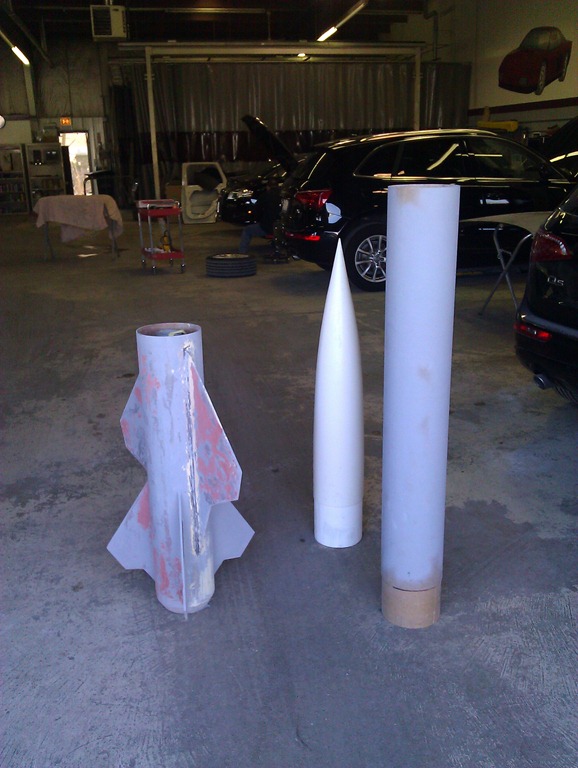
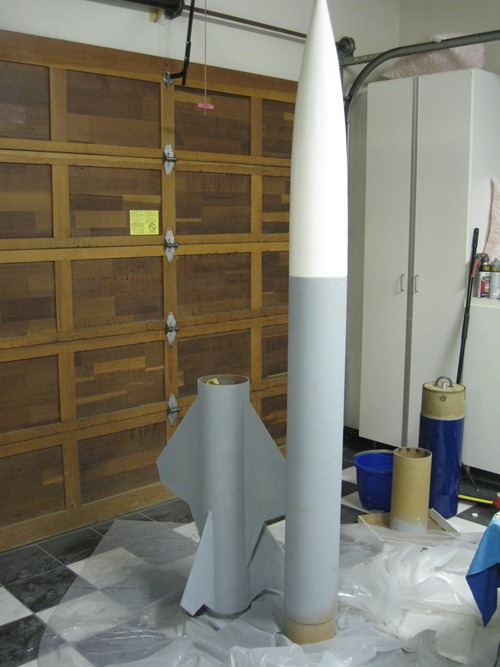
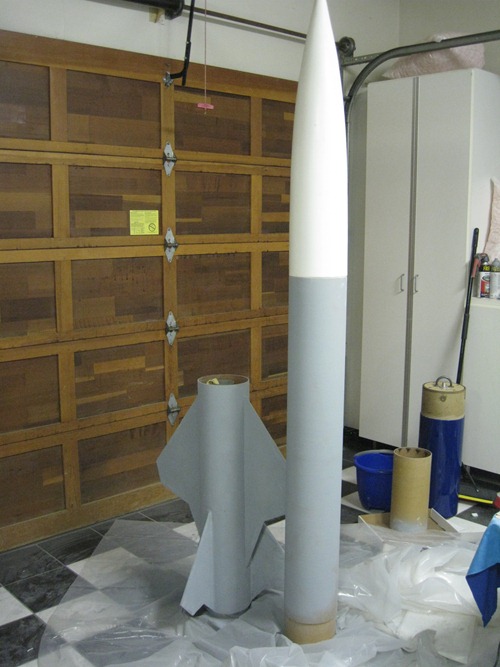
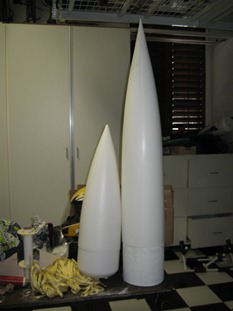 Spent much of the day cleaning up from the snowstorm. My four kids were school free yesterday, so I spent the day shoveling, and playing in the snow with them. I did find a little time for the rocket. The picture on the left is the original plastic nosecone. The one on the right is it’s
 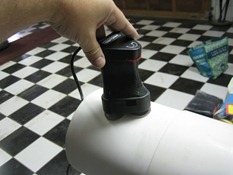 this in my office. You would be surprised at the amount of fiberglass dust even a small sanding can create. For sanding curved surfaces, I use a Crasftman 3D sander. The sander has three floating heads each with their own circular sanding pad. This lets the sander conform to most curved surfaces, reducing the possibility of creating a slat spot using a traditional sander. Unfortunately, they don’t seem to make these anymore, so the pads are becoming a little hard to find. This is an indispensable tool for me, so if someone knows of a reasonable alternative, let me know!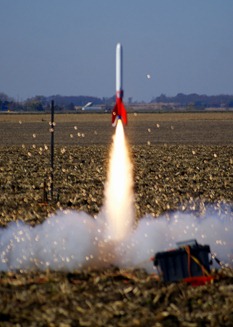
 ile I didn’t show the original fiberglassing of the magnaframe airframe, there wasn’t a lot of complexity involved. Just as I was leaving HPR rocketry the first time (thanks to the BATF), I had found a company called Fibersock that sold a knitted fiberglass “sock” that let you fiberglass a tube without any seams or complexity. Upon my return to HPR (thanks to Tripoli & NAR beating the ATF in court), Fibersock is gone, but the product is still around. Giant Leap sells a version they call “easyglas” which is exactly the same thing. Basically you pull the sock over the airframe, tie it up on either side, and slather on epoxy laminate. The only modification I’ve made to this process is to use a Teflon coated release film to ensure a very smooth surface, and no air bubbles. This is unlike any peel-ply, or release film I’ve ever used. Very easy to remove, very smooth, super easy to cut and position. Frankly, it’s so well made, when doing tip-to-tip lamination on a small rocket, I’ll often use the same piece of cut release film over and over. Only place I’ve found it i s
  fiberglass for finishing. I’ve found Kevlar almost impossible to sand to a smooth finish once it is cured. a thin layer of fiberglass over the top of the Kevlar provides a great base to sand and smooth. I first laid some scrap newspaper over the fins to create the base outline of the fin area. I then cut out the newspaper, and used it as a base to build a cutting template out of foam board. The newspaper gave me the base dimensions, but I needed to add about 2 inches of cloth in each direction to ensure complete coverage, and allow for the Kevlar and fiberglass to wrap around the thick fin edge.
 A typical rocket fin made out of g10 fiberglass would be about .093, to .125 inches thick. My fins and wings were about five times thicker, requiring some creative solutions down the road. My main goal in creating the laminating fin can is to ensure the fin’s don’t rip off during flight, and increase their strength in case the rocket lands funny. I plan on putting a LOT of time into the finish (I have an airbrush, and like to play….), and would be crushed if a great flight ended with a broken fin.
 elease film (reducing weight), and creating a good mechanical connection between the epoxy, fabric, and fins. In my case, I was less concerned about weight, but wanted to make sure I would have a good mechanical bond, including the thick edge of the fins. There are lots of great tutorials on the web on how to do tip-to-tip lamination without vacuum sealing, but all of the ones I have seen assume you have a fairly thin fin. The best I’ve seen is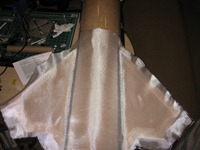

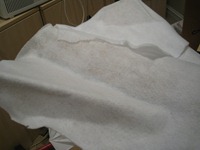
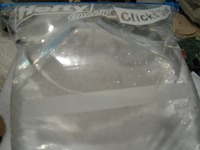
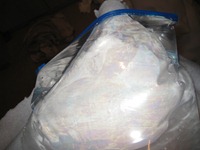

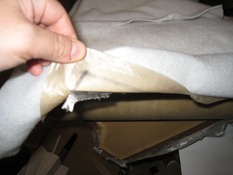
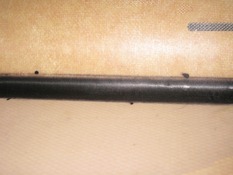
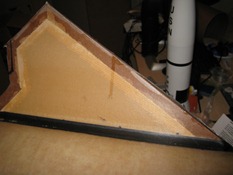 I only had two issues with the process, neither was too critical. First, on the edges of each Fin, I had doubled the lamination. The second layer of lamination didn’t have the pressure of the first, which you can see looks like an air bubble along the leading edge of the fin. This isn’t a big deal, As I will be sanding down the second layer, which is mostly fiberglass. The second issue you can also see in the picture on the left is a few epoxy runs. This is a run of epoxy over a side of lamination that has already dried. Again, not too big of a deal, just requires sanding. As you can see from the picture above, I had to laminate over the pre-cut slots for the wings to get a true tip-to-tip fin can. The pre-cuts were already too small, so the next phase will be to sand the fin can, re-cut the wing slots, and install the wings. Should start to look like a real rocket soon.
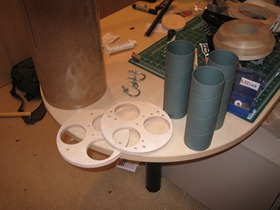
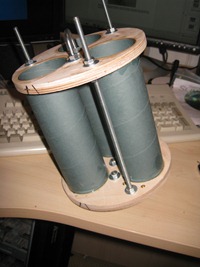
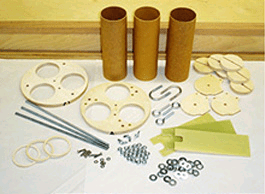 Three 2.5” x 8 phenolic tubes
 othing is ever as it seems
  Step one was to install the ubolts on each ring, then glue in place the three phenolic tubes into the top, or bottom ring. I opted to use the Hysol glue, although I knew it would be overkill for the bay. I just wanted the two hour pot time. Getting all three tubes perfectly parallel turned out to be more difficult than I expected. After a lot of trial and error, I opted to build a small jig that would keep both rings in place, while one ring dried, laying flat on a piece of teflon coated release film which I normally use for fiberglass / carbon fiber lamination. I just inverted the tubes to glue in place the second ring, ensuring the markings on the side of the rings lined up for installation of the hardware later. This could have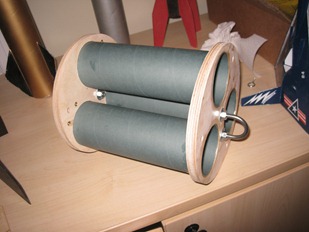
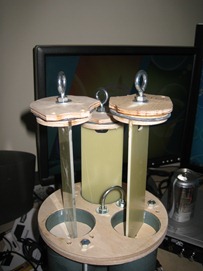
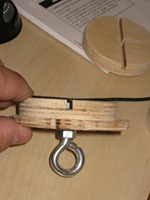 ade sure they were true, and moved to putting together the top of each pod. Oops! when putting the eyebolt through the cover, and top bulkhead with the dado slot, it became obvious the eyebolts were too small. Before going out and buying new ones, I measured EVERYTHING to ensure the bulkheads or cover’s were not cut wrong. I also email Giant Leap just to be sure. A quick stop at home depot, and I was back in business. I then threaded the eyebolts, glued t
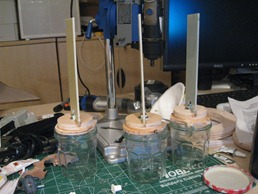 he bulkheads to the cover, and bolted them together. Once cured, I dry-fit the 3 G10 2.5” x 7” sleds into the dado slots of the bulkheads making sure there was no overhang. I then glued everything up, and left it overnight. While the glue was drying, I installe
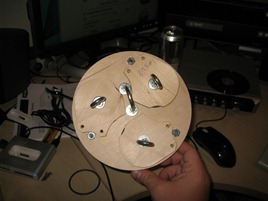
 d the three all-thread rods through the two centering rings. This was actually a critical component, as the all thread would be secured through the center rings I had previously installed in the upper airframe. The main parachute kevlar shock cord would be connected to the U-bolt on the top of the av-bay, so the all thread, and center rings would be the only things connecting the main parachute to the rocket. Another great part of this hobby are the ‘cool’ tools you can buy, which could never normally be justified. In this case, my cool tool of choice was a digital toque wrench which enabled me to apply exactly the same amount of force on every bolt secured to the all-thread. In turn, th
 e extreme recovery forces should be evenly distributed through the rods. At least, this is what I told my wife when she saw the bill for the tools….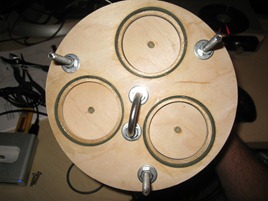
 I’m thinking about separating the nosecone at main deployment to ensure it doesn’t do any damage to the airframe. I recently got the Scott Glass Olgive nosecone in (Thank you Scott Broderick!), and it is rigid, and heavy!
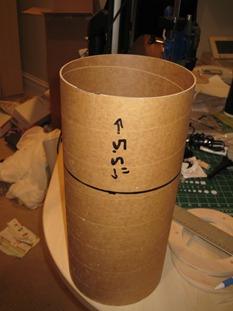 ctromagnetic deployment equipment. The extra length didn’t change any of the build plans for this portion. First up was to measure the coupler. 5.5” of the coupler is used to joining the two sections of the rocket, while the remaining space in the coupler will be housing the AV bay. I installed the coupler into the upper airframe up to the measurement point, then drew a complete line around the diameter of the coupler to indicate the section that would be left out, as well as drawing a line inside the airframe indicating where the coupler would end. I removed the coupler, then went about sanding both the outside of the coupler up to the line, and the inside of the airframe, down to the line. I shot a few lines of epoxy inside the airframe, a
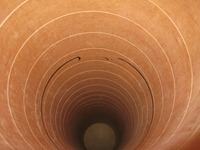 s well as on the outside of the coupler, then used a
 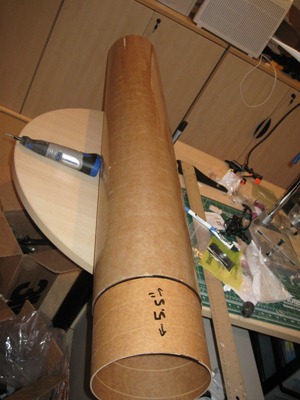 credit card to evenly coat both surfaces. So far, so good. Once again I clamped down the upper airframe and left everything to cure for the next 24 hours. I returned to a nicely epoxied coupler and re-measured everything to ensure nothing slipped overnight. The last step required was to install two centering rings into the airframe at the end of the coupler. The center rings each with 3 holes to allow the all thread of the AV bay to go through the center rings and get secured with wing nuts. This is a great design decision by Giant leap, as it *should* allow me to easily remove the AV bay for programming and prepping before a launch. When I went to install the couplers however, I cam to realize my arm won’t reach all the way through the upper airframe to both add glue, and position the two centering rings properly. The centering rings required fairly precise placement to ensure the all-thread holes were aligned properly. I couldn’t slide the center rings through the coupler end, as the
 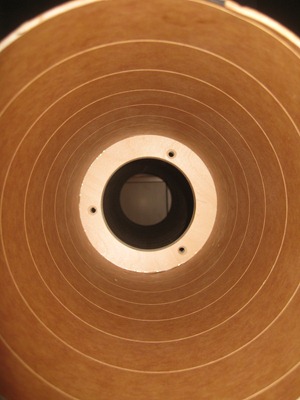 reduction in the inner diameter of the airframe was now sufficiently small to not let the center rings through. I then realized, even if I do figure this out (which I would), how in the world am I going to thread on the wing nuts onto the AV bay all thread when it comes time to install the AV bay? The solution to the second problem, turned out to be the solution to the first problem. I had NO interest in cutting a door on the rocket. Instead, I found a piece of spare PVC piping (I use it a lot to make rocket holders) cut it down to 18”, and used my dremel to cut out two ‘wingnut notches’ on either side of PVC wall. this will allow me to secure the wing nut into the PVC pipe, and use the PVC pipe as an elongated screw driver to install each of the wing nuts. I could also use the PVC pipe to push the center rings into place. the only real modification I had to do was CA the washers onto the forward facing center ring all thread holes – my little PVC trick won’t hold a washer correctly. Viola, mission accomplished. The only thing I don’t like about this solution is it now requires me to bring a custom build ‘tool’ to every launch I plan on flying this rocket. Time to add “Pack PVC wing nut driver” to my ever increasing pre-flight / pre-leaving home checklist. I waited another 24 hours, then did a trial run of installing the AV bay into the center rings. Bingo, they went right in, and my PVC pipe worked well as an elongated driver. Now that the upper airframe is complete, I can install it onto the lower airframe to add leverage to put the rocket on a stand, and start my external (and internal) fillets.
 from “
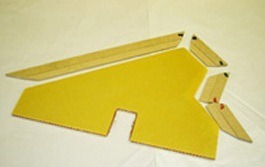 proper CG / CP. One of the issues you can clearly see wit this material is, it’s impossible to make a beveled leading edge with it. In my case I had custom MDF machined & mitered to cover all of the exposed edges. Just needed to bevel the MDF into a ‘tongue’, and use an exacto knife to build a ‘groove’ in the exposed edges. One REALLY nice things about the fly-lite material, is it is really easy to cut. In fact, I just drew around my template with a felt tip pen, and used a pair of shearing scissors to cut the line. You can’t
 really get any easier than that! Of course, that means the perpendicular shear strength of the material is quite low. How low? well, the formula to compute shear strength is;
  While I don’t have the equipment to measure principal stress, I did use a piece to determine it’s ‘relative’ stre
 ngth. With the MDF epoxied in, there was no amount of stress parallel to the fiberglass sheeting I could create (using a complete set of weights) that would cause the material to fail. With perpendicular force however, it failed at about half the force of a duplicate sized piece of G10. My conclusion? Kevlar and fiberglass lamination.
 any fit issues. The only real complication was the upper fin tab would now be epoxied to the motor tube within an entirely closed portion of the airframe. I had already glued in place both center rings which would make it challenging to create inner fillets on the fin tab. My solution…. epoxy gun! for someone as messy as I, I tend to get epoxy in lot’s of places it should never be. I found glue guns (both large, and small) to be REALLY helpful when you need to get a bead of epoxy in a very
  specific spot. They also have ‘mixing’ chambers within the tip, which mixes the two parts of epoxy as it exits the gun. This is VERY handy, although I have found it generally doesn’t mix epoxy nearly as well as doing it by hand in a measuring cup. In this case, I put a bead of epoxy on the fin tabs, then fit them into the through-the-wall fin slot. I left the fin on for a minute or so, then pulled it back out. Looking inside the upper fin tab slot, I could clearly see the line of excess epoxy left by the fin tab. I just inserted the epoxy tip through the slot, and put down a really nice bead of the high viscosity 120HP epoxy. I then reapplied another bead of expoy on the tab root, and the exposed lower centering ring, and reinserted the fin into the slot. I then put a little pressure tape across the outside edge of the fin to keep it in place, and clamped the airframe to my desk. peeking through the wing slots, I could cleary see a great motor tube / fin tab fillet had formed. The aft fin tab was open to viewing – it looked exactly like the upper tab without the big fillet, as I planned on making those later in the project, in conjuction with the outer fin fillets. turned out the lights, to let the epoxy cure for the next 24 hours.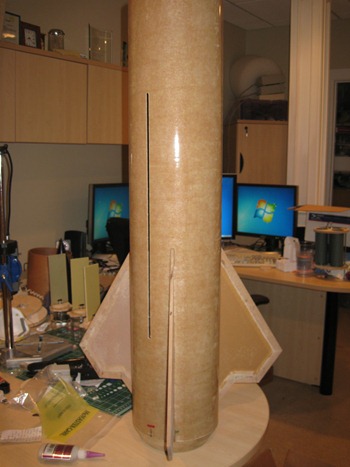
 n adding video equipment in the rocket. There is nothing worse than watching a spinning rocket video – gives me a headache, and you really can’t see anything. Here’s a good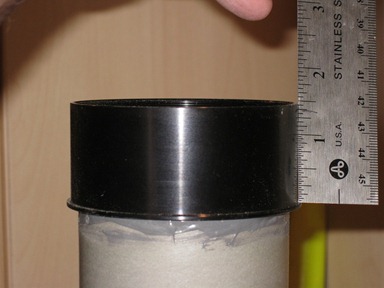
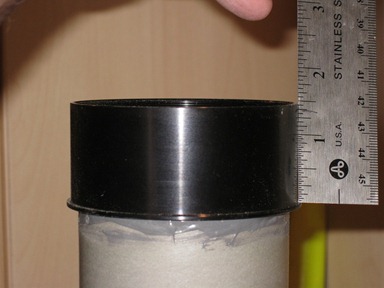 vious builds.
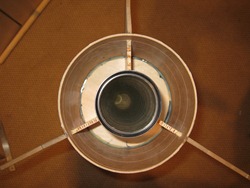
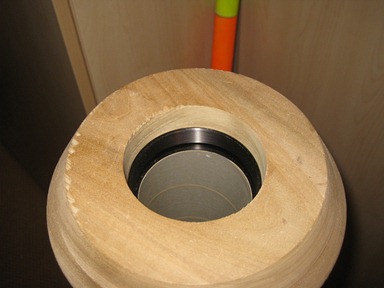 nches shorter than the stock build. Since the fin tab would be farther down the motor tube, another modification I had planned was extending the boattail to ensure it would buttress the end of the fin tabs. Once I extended the boat tail, I realized the (now glued in place) slimline would not fit through the now elongated boattail! The end of the slimline adapter has a small tab that’s meant to go behind the aft centering ring in a traditional build. So, as you can see on the left, the slimline adapter was now “stuck” about 2 inches shy of the end of the boattail. Obviously, this won’t work (unless I want the boattail to catch on fire….). Luckily, the metal tab was no match for a grinder
  I sure am glad I caught this – If I had installed the motor tube and center rings into the rocket airframe, grinding down that tab would have been almost impossible.
 t. I also drilled two large holes in the centering ring, in preparation for adding foam later in the build process. Finally, I added some CA on both the upper, and lower nuts on the u-bolts to ensure they would not come loose during the extreme launch this rocket is likely to make.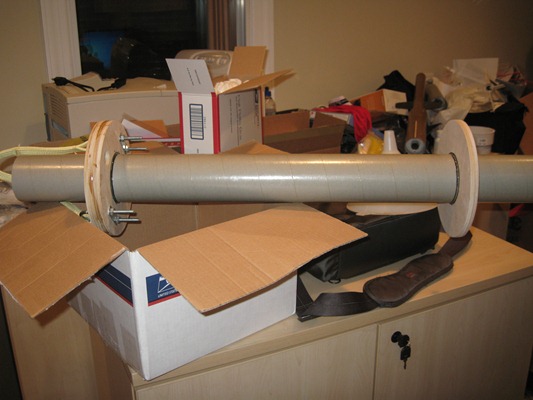
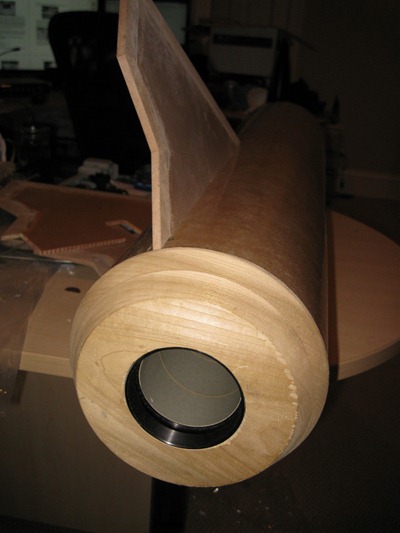 I glued the center rings – this was just a final check before I epoxied the motor tube and centering rings into the airframe. For good measure, I also installed the boattail, ensuring the slimline would go through the length, and the end of the boattail would buttress the fin tabs.
![rocksim[5]](https://therocketbarn.com/wp-content/uploads/2011/01/rocksim5.jpg?w=512&h=135 "rocksim[5]")
![IMG_2428_thumb[1]](https://therocketbarn.com/wp-content/uploads/2011/01/img_2428_thumb1.jpg?w=240&h=180 "IMG_2428_thumb[1]")

 The Zoghlin Rocket Barn